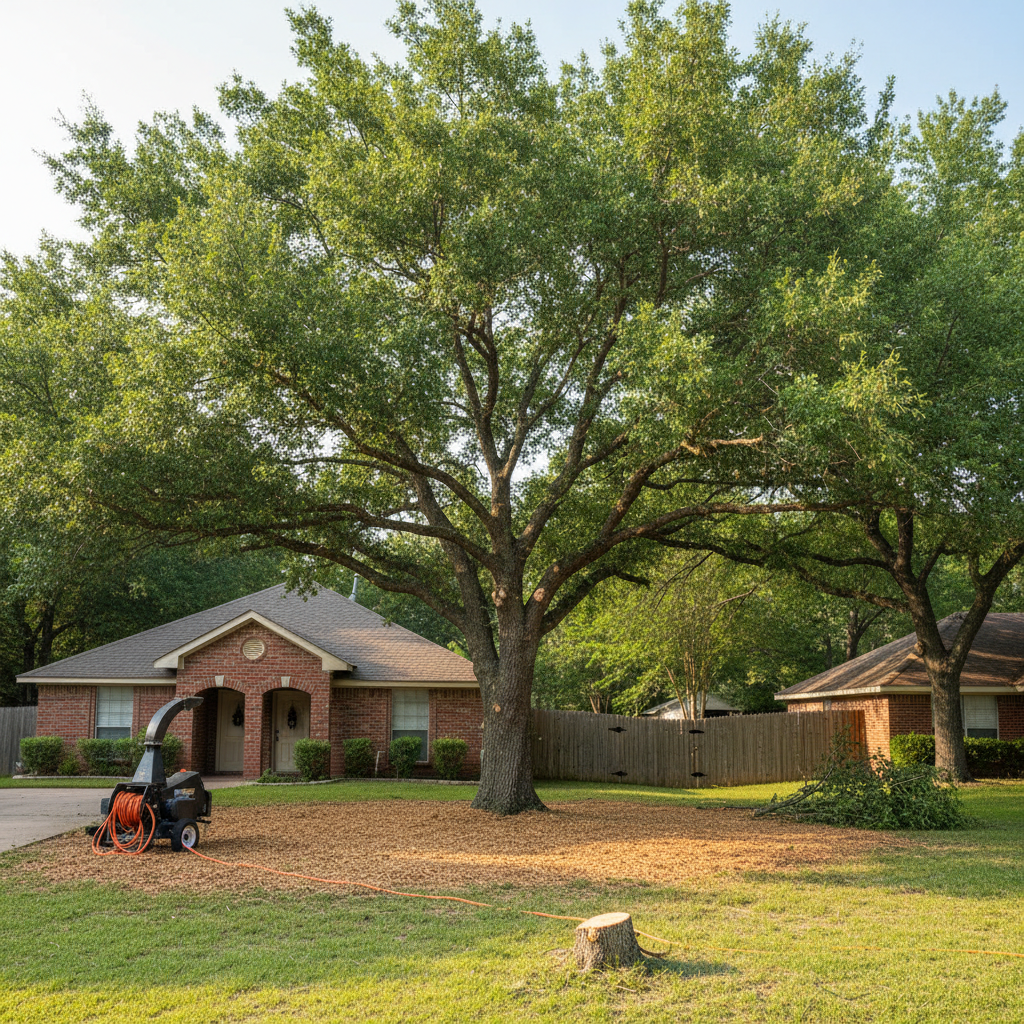
You just had your trees trimmed, and they look great. But that's not the whole story, is it? Just like anything else around your house, trees need ongoing care if you want them to stay healthy and looking good, especially here in Live Oak.
Making Your Trimming Last Longer
Getting a professional trim is a pretty solid investment. To make sure that investment actually pays off for years, you've got to think about what happens next. First off, don't let small issues snowball into big ones. After a good trim, keep a close eye on how the tree responds. Is it putting out new growth where it should? Are there any branches that look stressed or are dying back? Catching these things early can save you a lot of headache — and money — down the road.
Proper watering is super important, especially for younger trees or those that just had a significant trim. Our Live Oak summers are brutal, with long stretches of 100-degree days. Even mature trees can get stressed out. Deep, infrequent watering is always better than shallow, frequent sprinkles. You want that water to really get down to the root system, not just evaporate off the surface. Oh, and don't forget about mulching. A good layer of mulch around the base of your trees helps hold onto moisture, keeps the soil temperature steady, and keeps weeds down, which means less competition for water and nutrients. Smart, right?
What Regular Tree Maintenance Looks Like
Regular maintenance isn't always about big, dramatic cuts. A lot of it is preventative and observational. You should be doing a visual check of your trees at least a few times a year, maybe more after a big storm. Look for dead or diseased branches. These are often easy to spot – they won't have leaves when they should, or the bark might be peeling. Removing these helps prevent disease from spreading and keeps pests from setting up shop.
Another thing to watch for is rubbing branches. When two branches rub against each other, they create wounds that are perfect entry points for disease. Sometimes, you can handle small, low-hanging branches yourself with the right tools, but for anything significant or high up, you're better off leaving it to someone who knows what they're doing.
Think about the structure of the tree, too. Are there any branches growing inward toward the center, or crossing over other healthy branches? These can create dense canopies that restrict airflow and light, which can lead to fungal issues. Thinning out these problem branches helps the whole tree breathe.
Warning Signs Your Trees Need Attention
Your trees usually tell you when something's wrong, you just need to know what to look for. Here are some common red flags:
- Deadwood: Lots of dead branches, especially in the upper canopy, can mean the tree is stressed or diseased.
- Fungus or Mushrooms: If you see fungi growing on the trunk or branches, it often indicates decay inside the tree.
- Cracks or Splits: Any significant cracks in the trunk or major limbs are serious. They can compromise the tree's structural integrity.
- Leaning: A sudden lean, especially after a storm, could mean root damage or instability.
- Pest Infestation: Holes in the bark, sawdust at the base, or unusual leaf damage can all point to pests. We see a lot of issues with borers here in Texas.
- Poor Growth: If a tree isn't putting out new leaves or seems stunted compared to others of its kind, something's off.
If you spot any of these, don't just ignore them. A small problem can quickly become a big, expensive, or even dangerous one.
When to Call a Professional
Look, I run Ace Tree, so you know I'm going to tell you to call a pro. But seriously, there are times when it's just not worth the risk or the potential for damage to your tree or property to do it yourself. Here's when you absolutely should pick up the phone:
- Any branch that's close to power lines. That's a huge safety hazard.
- Branches that are too high to reach safely from the ground or with a standard ladder.
- If you need to remove large limbs or an entire tree. This requires specialized equipment and training.
- When you suspect disease or pest infestation. A professional can diagnose the problem and recommend the right treatment.
- If a tree looks unstable, has major cracks, or is leaning significantly. This is an emergency waiting to happen.
- For structural pruning, like canopy reduction or crown thinning, which requires an understanding of tree biology to do correctly without harming the tree.
We've seen it all, from homeowners trying to tackle a massive oak with a chainsaw to folks who waited too long and now have a tree threatening their roof. Don't let that be you. A little proactive care and knowing when to call in the cavalry will keep your trees healthy and your property safe for years to come.